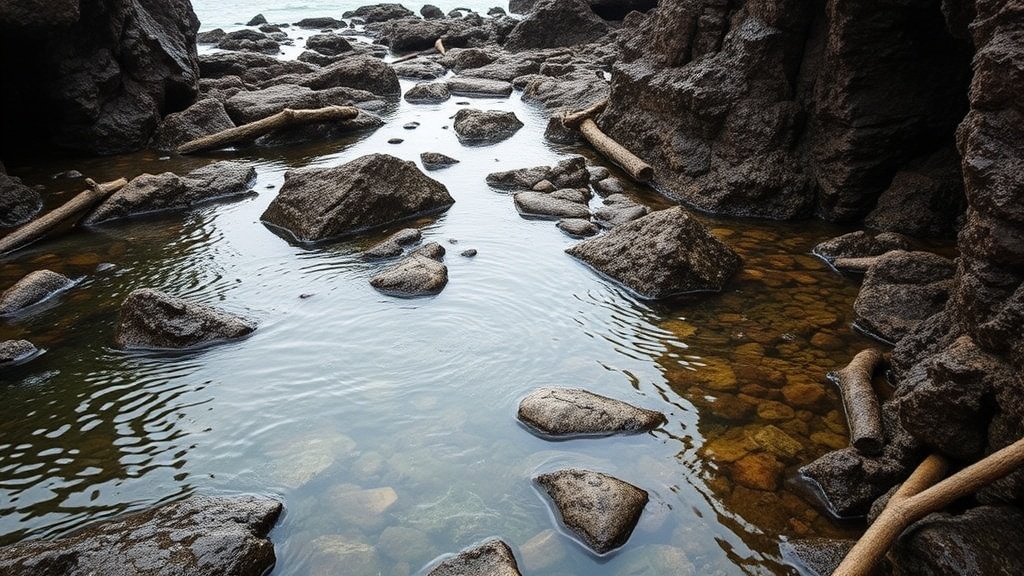
Finding the Best Secret Tide Pools in Cumberland

Most people think you need a boat or a specialized diving permit to see the best marine life on the Comox Valley coast. That’s a mistake. You don't need a yacht to find incredible biodiversity; you just need to know which coves to hit during a receding tide. This guide covers the specific locations, timing, and gear needed to find the best-kept secret tide pools near Cumberland and the surrounding coastline.
Finding these spots isn't about luck. It's about understanding the rhythm of the Pacific Ocean. If you show up at high tide, you're just looking at a wall of water. If you show up at low tide, you've hit the jackpot.
Where are the best tide pools near Cumberland?
The best tide pools are located in the rocky intertidal zones of the coastline surrounding the Comox Valley, specifically near the protected coves of Denman Island and the rugged stretches of the Discovery Island area. While Cumberland itself is nestled in the mountains, the coastal access points are a short drive away via the Hilcrest or through the Comox Valley. You'll find the most diverse ecosystems in the sheltered, rocky inlets rather than the wide-open sandy beaches.
If you're looking for a quick hit of marine life, head toward the rocky outcrops near the shoreline of the nearby islands. The sheltered nature of these coves protects the smaller organisms from the heavy swells of the Strait of Georgia. It's a perfect environment for anemones, sea stars, and small crabs to thrive.
Here are the three primary zones you should look for:
- The Protected Coves: These are low-energy environments where the water stays relatively still. This is where you'll find the most delicate life forms like sea anemones and nudibranchs.
- The Rocky Points: These areas face more direct wave action. They are great for seeing hardy species like sea urchins and larger barnacle colonies.
- The Estuary Margins: Where the freshwater meets the salt, you'll see different species that can handle varying salinity levels.
It's worth noting that the "best" spot changes depending on whether you're looking for a photo op or a science lesson. A calm day makes observation much easier.
What is the best time to go tide pooling?
The best time to go tide pooling is during a low tide, specifically during a "minus tide" or a spring tide when the water recedes much further than usual. You want to time your visit so that the lowest point of the tide occurs during daylight hours. This ensures you aren't stumbling over rocks in the dark or missing the details of the creatures living in the crevices.
Don't just check the weather; check the lunar cycle. The most dramatic reveals happen during the new moon and full moon phases. This is when the gravitational pull is strongest, dragging the ocean away from the shore and exposing the hidden worlds beneath. If you want to be precise, check the UNESCO documentation on intertidal zones to understand how these biological cycles function.
A quick tip: Always check a local tide table before you leave the house. If you arrive at high tide, you're just going to be walking through wet sand. You'll want to be on the rocks about two hours before the absolute low point for the best experience.
Essential Gear Comparison
Don't go out in just a t-shirt and sneakers. The terrain is slippery, and the water is cold—even in July. I've found that having the right gear changes the entire experience from a soggy mess to a successful outing.
| Gear Item | Purpose | Recommended Brand/Type |
|---|---|---|
| Footwear | Traction on slippery rocks | Neoprene booties or hiking boots with high grip |
| Outerwear | Wind and spray protection | A lightweight shell like the Patagonia Torrentshell |
| Observation | Seeing into deep pools | A magnifying glass or a clear glass jar |
| Safety | Stability on uneven terrain | A sturdy walking stick or trekking poles |
If you're serious about it, grab a pair of waterproof binoculars too. It's much easier to see the tiny details of a sea star from a distance without disturbing it. Just remember—look, don't touch. Most of these creatures are incredibly sensitive to the oils on human skin.
How do I stay safe while exploring rocky shores?
To stay safe, always wear sturdy, non-slip footwear and keep an eye on the incoming tide at all times. The ocean moves much faster than most people realize, and a "sneaker wave" can catch you off guard in an instant. Never turn your back on the ocean, especially if the swell looks heavy or agitated.
The rocks in British Columbia are notoriously slippery due to algae and constant moisture. I've seen plenty of people wipe out because they wore flimsy sandals. If you're heading into the more remote coves, a pair of high-quality hiking boots or specialized water shoes is a non-negotiable. If the weather turns, get off the rocks immediately. The wind can pick up in seconds around the Comox Valley coast.
Also, be mindful of your surroundings. If you see dark clouds or a heavy swell building, it's time to head back to the car. The goal is to enjoy the nature, not end up in a medical tent in Comox.
"The intertidal zone is a high-stress environment for life. Respect the ecosystem by observing from a distance and leaving nothing but footprints."
One more thing—watch out for the wildlife. While you're looking down at the tide pools, keep an eye up for sea birds or even larger marine mammals. Most of the time, they'll keep their distance, but it's good to be aware of your environment. It's a shared space, after all.
A Checklist for Your Outing
- Check the Tide: Verify the low tide time via a local marine forecast.
- Dress in Layers: Even if it's sunny, the ocean breeze is chilly.
- Pack a Small Kit: A magnifying glass, a camera, and a small notebook.
- Notify Someone: Tell a friend where you're going, especially if you're heading to a more secluded beach.
- Pack Out Trash: Whatever you bring in, make sure it leaves with you.
The biodiversity here is genuinely staggering. You'll see things that look like they belong in a sci-fi movie—brightly colored sea slugs (nudibranchs) that look like neon noodles, or sea urchins that look like spiked bowling balls. It's a tiny, vibrant world that exists only a few feet from the shore.
When you're looking at a tide pool, try to look at it from different angles. A pool might look empty from above, but once you lean down and look through the side, you'll see the movement of tiny shrimp or the slow creep of a hermit crab. It's all about the perspective.
The more you learn about the specific species, the more rewarding the experience becomes. If you're interested in the actual biology, the Wikipedia page on Intertidal Zones is a great starting point for understanding the different zones and the organisms that live there. It makes the "why" behind what you're seeing much clearer.
Just remember to be gentle. These pools are fragile ecosystems. One heavy footstep can destroy years of growth for certain species. If you see a pool that looks particularly active or crowded, move to the next one. There's plenty of space to explore without causing damage.